Collecting unpaid customer debts: from formal notice to enforcement
In short
Collecting unpaid customer debts (veresiye, sales on credit) in Turkey starts with a formal notice and moves to enforcement. Limitation periods, how far a shop ledger counts as evidence, the seven-day objection window and the one-year annulment action, with sources.
Key points
- The general limitation period is ten years; for small retail sales the law sets five, and which one applies to a shop's credit sales depends on the case.
- A ledger without an opening or closing approval, or whose entries do not confirm each other, counts as evidence against its owner in a commercial case.
- The debtor has seven days from service of the payment order to object; the creditor then has one year from service of the objection to file an annulment action.
- A part payment, an acknowledgment of the debt by the debtor and the start of enforcement each interrupt the limitation period.
Contents
Collecting unpaid customer debts under Turkish law runs in three steps: put the debtor in default with a formal notice, start enforcement proceedings if they do not pay, and file an action to annul the objection if they object. Two periods matter once enforcement starts: seven days to object to the payment order, one year for the annulment action [1]. The debt itself expires after five or ten years [2].
What we run into most with veresiye (selling on credit, written into the customer's tab) is ordinary: the customer keeps putting you off and stops answering the phone.
Take a hypothetical stationer who supplies office goods to a local business and writes the amount into the ledger, with no due date agreed. The business says "next week", then stops picking up.
Collecting unpaid customer debts: how long do you have?
You have ten years to collect most debts: under the Turkish Code of Obligations, unless the law says otherwise, every claim falls under a ten-year limitation period [2]. One exception matters here: claims from small crafts and from small retail sales fall under a five-year period [2].
The law sets no amount for "small retail"; whether the stationer's claim falls under five years or ten depends on the case. If you want to be careful, work from five years and put the claim into enforcement well before it.
The period starts on the day the claim becomes due, the day payment can be demanded [2], and the parties cannot change it by contract [2].
It is interrupted if the debtor acknowledges the debt, pays part of it, or the creditor starts enforcement proceedings [2]. For the stationer: every part payment goes into the ledger with its date.
Does a shop ledger count as evidence?
On its own, not always. In a commercial case a ledger counts as evidence only if it was kept completely and properly under the law, its opening and closing approvals were made and its entries confirm each other [3]. A ledger without an opening or closing approval, or whose entries do not confirm each other, is evidence against its owner [3].
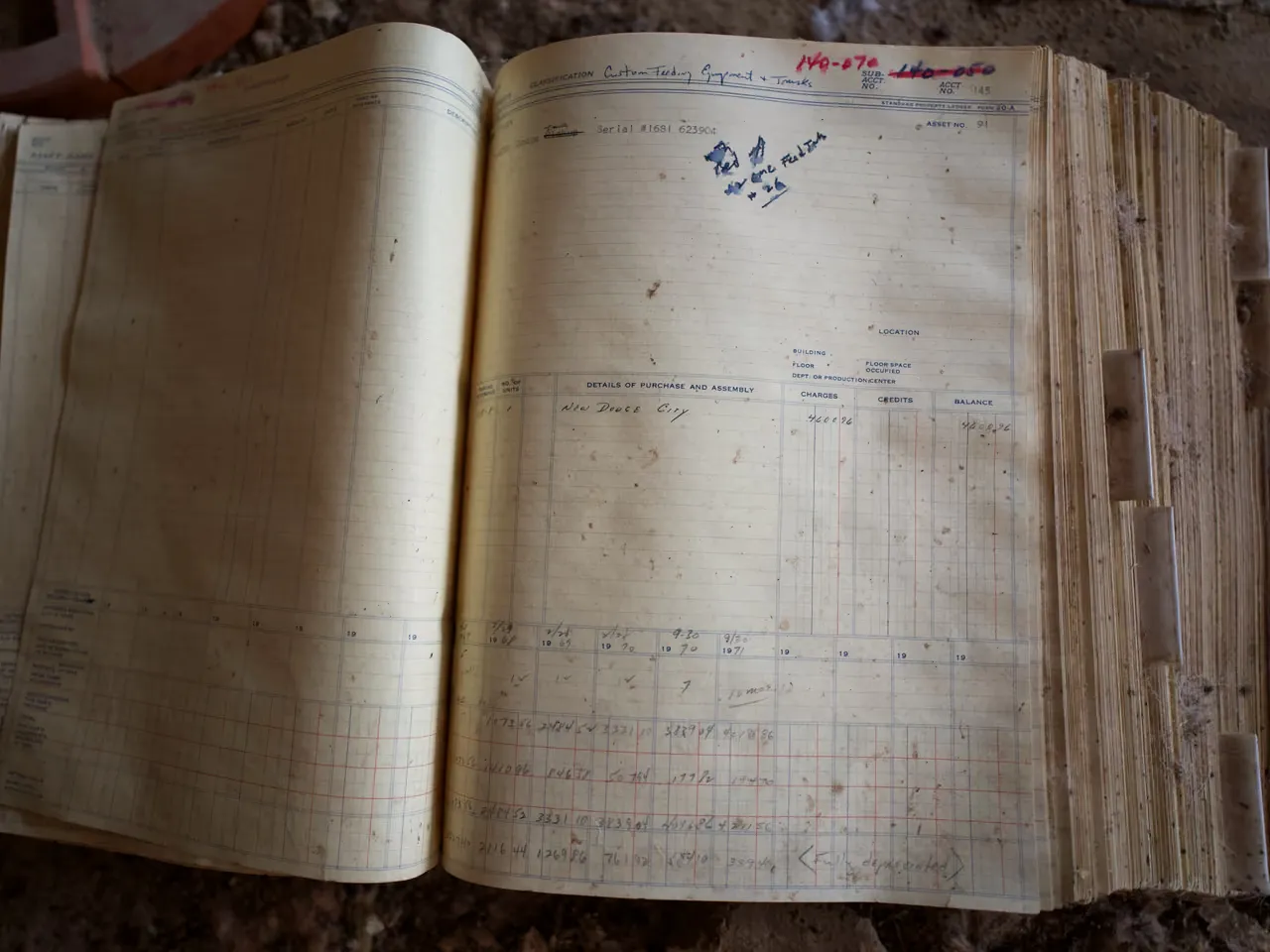
If you count as a merchant, keeping books is a legal duty, and the books must be certified by a notary when opened and closed [4]. A bound ledger on the stationer's counter with no notary approval may not be enough to prove the claim.
There is one more rule on proof: legal acts above an amount set in the law must be proved by a written instrument [3]. The amount changes over time, so check the figure in force on the date of the transaction. As the claim grows, attach a document signed by the debtor to the ledger entry.
Is a formal notice required?
Normally, yes: a debtor with a due debt is put in default by the creditor's formal notice [2]. The exception: if the parties set the payment day together, or fixed it by a proper notice under a right reserved in the contract, default starts when that day passes [2]. Unless the parties agree otherwise or the nature of the relationship shows otherwise, a debt falls due the moment it arises [2].
The stationer agreed no due date, so the exception does not apply. The notice has to go out.
My advice starts earlier: tell the customer the due date at the first sale and write it in the ledger. When the date is set together, default starts once it passes [2].
If you and the customer are both merchants, the law also sets the form. Between merchants, notices that put the other side in default must go through a notary, by registered letter, by telegram or by registered electronic mail with a secure electronic signature [4]. If either side is not a merchant, that article does not apply; send the notice in a way you can prove later.
A phone call works as a reminder for us, but it leaves a trace that is hard to prove. If the call gets nowhere, we follow up with a message that states the amount and the date, so there is a written trace. If that is not enough, move to a written notice.
How enforcement without a court judgment starts
The creditor files the enforcement request at the enforcement office, in writing, orally or electronically [1]. If the enforcement director finds the request meets the legal requirements, the office issues a payment order [1]. The order tells the debtor to pay the debt and costs within seven days [1].
Before filing, the stationer gathers:
- the ledger entry, the receipt or a document signed by the business
- reminder messages
- the formal notice and proof it was sent
What happens when the debtor objects?
When the debtor objects, the objection must reach the enforcement office within seven days of service of the payment order, by petition or orally [1].
If the business objects, the stationer has two routes. The creditor can ask for the objection to be removed, or file an action to annul the objection in the general courts within one year of service of the objection [1].
In the court action the burden of proving the claim is on the creditor [1]. Before filing, ask a lawyer who handles enforcement which route fits your documents, and put your limitation and commercial-case questions to the same person.
Before a case reaches court, record keeping matters most: the due date, every part payment, the reminder dates and the notice should sit in one place. Our guide to keeping a veresiye ledger (in Turkish) covers the ledger itself, and the account and receivables tracking page (in Turkish) shows how to follow debts and receivables per customer.
This week, list every overdue debt with its dates and start your phone calls from the top of that list.
This article is general information, not legal advice. For your own case, consult a lawyer who handles enforcement. Last checked: 22 October 2026.
Frequently asked questions
How long do you have to collect a veresiye debt?
The general limitation period is ten years, and the Turkish Code of Obligations sets five years for debts from small retail sales (Articles 146 and 147). Which one covers a given credit sale depends on the case.
Do you have to send the debtor a formal notice?
A debtor with a due debt is normally put in default by the creditor's formal notice; if the parties set the payment day together, default starts when that day passes (Turkish Code of Obligations, Article 117). For a credit sale with no agreed due date, send the notice.
How long does the debtor have to object to a payment order?
Seven days from service of the payment order, by petition or orally to the enforcement office (Enforcement and Bankruptcy Law, Article 62).
Related service
Customer credit & accounts
Customer balances, collections and supplier accounts.
Sources
- 2004 sayılı İcra ve İflas Kanunu (md. 58, 60, 62, 67, 68) (opens in a new tab)
- 6098 sayılı Türk Borçlar Kanunu (md. 90, 117, 146, 147, 149, 154) (opens in a new tab)
- 6100 sayılı Hukuk Muhakemeleri Kanunu (md. 200, 222) (opens in a new tab)
- 6102 sayılı Türk Ticaret Kanunu (md. 18, 64) (opens in a new tab)